Körber Digital
A supply chain where one lost ID can cost a patient their therapy
Healthcare, pharma, logistics
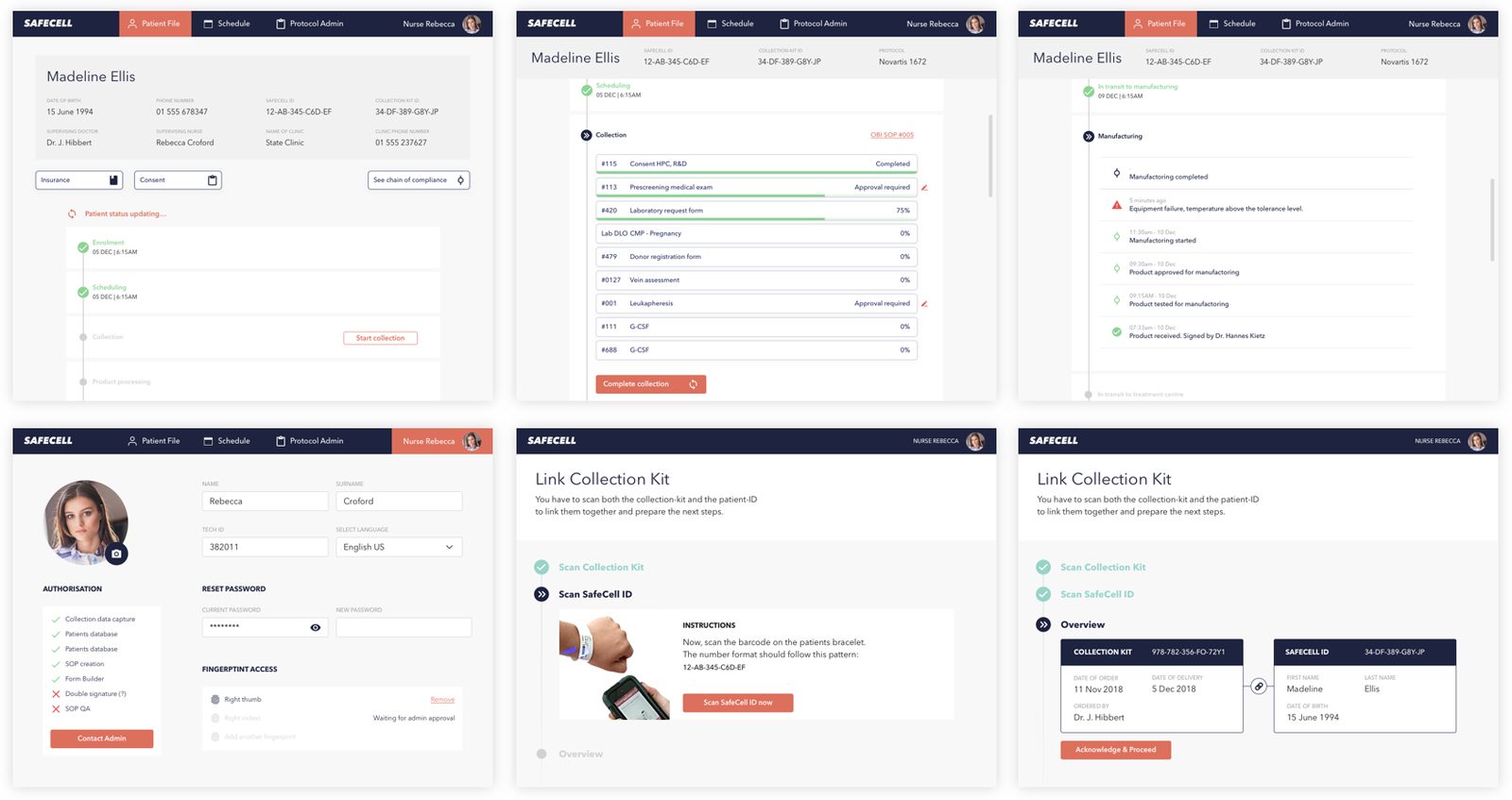
Cell and gene therapies treat blood cancers and genetic diseases by taking a patient's own cells, altering them, and giving them back. SafeCell was a digital, end-to-end supply chain for that process, from admitting the patient to the cure.
01 · The problem
Phone calls, emails and paper forms
Clinics, blood collection centres, couriers and manufacturers coordinated each therapy by email and phone, each with a different identifier for the same patient and its own paper forms. With few patients this worked. As demand grew, it would not scale, and in this chain a mix-up is not an inconvenience.

02 · My part
Assumptions first, then fieldwork
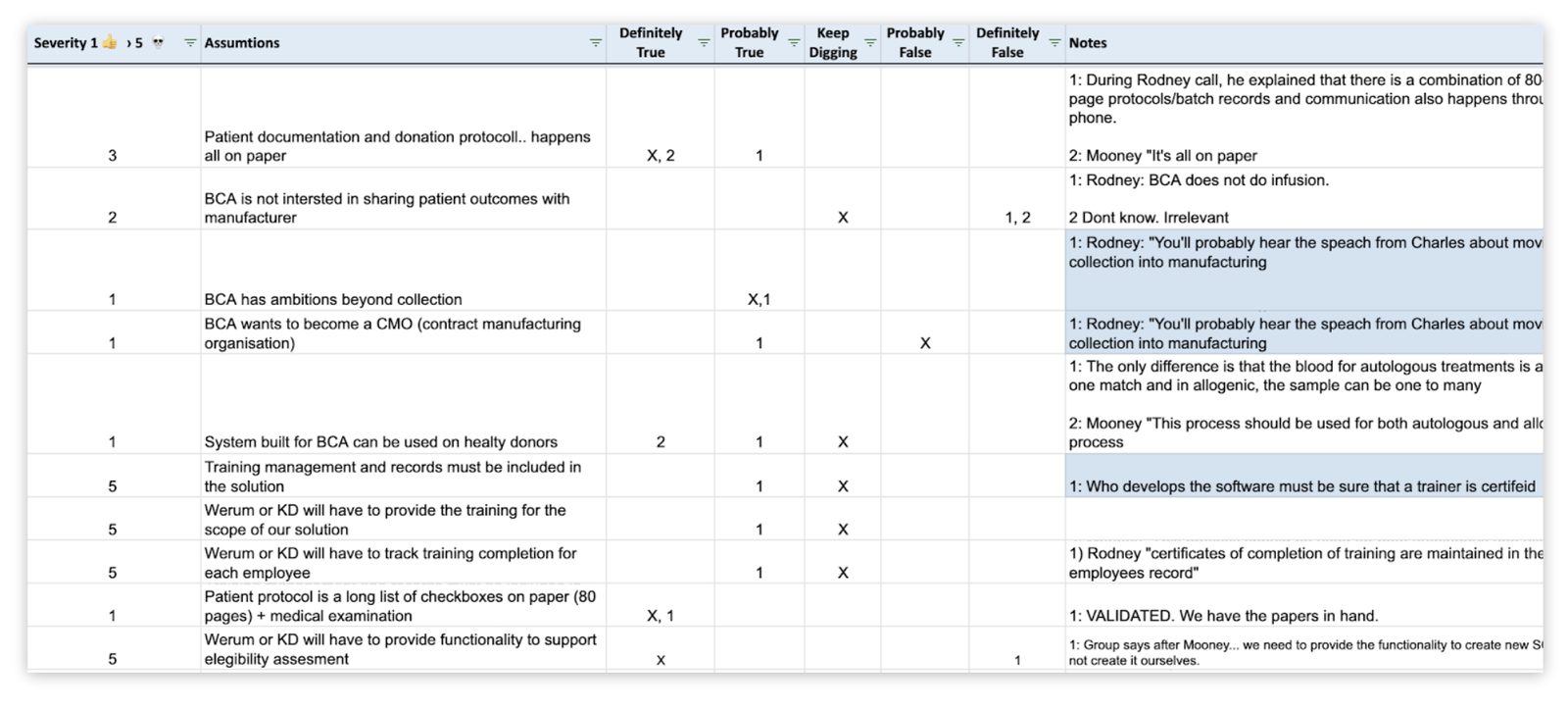
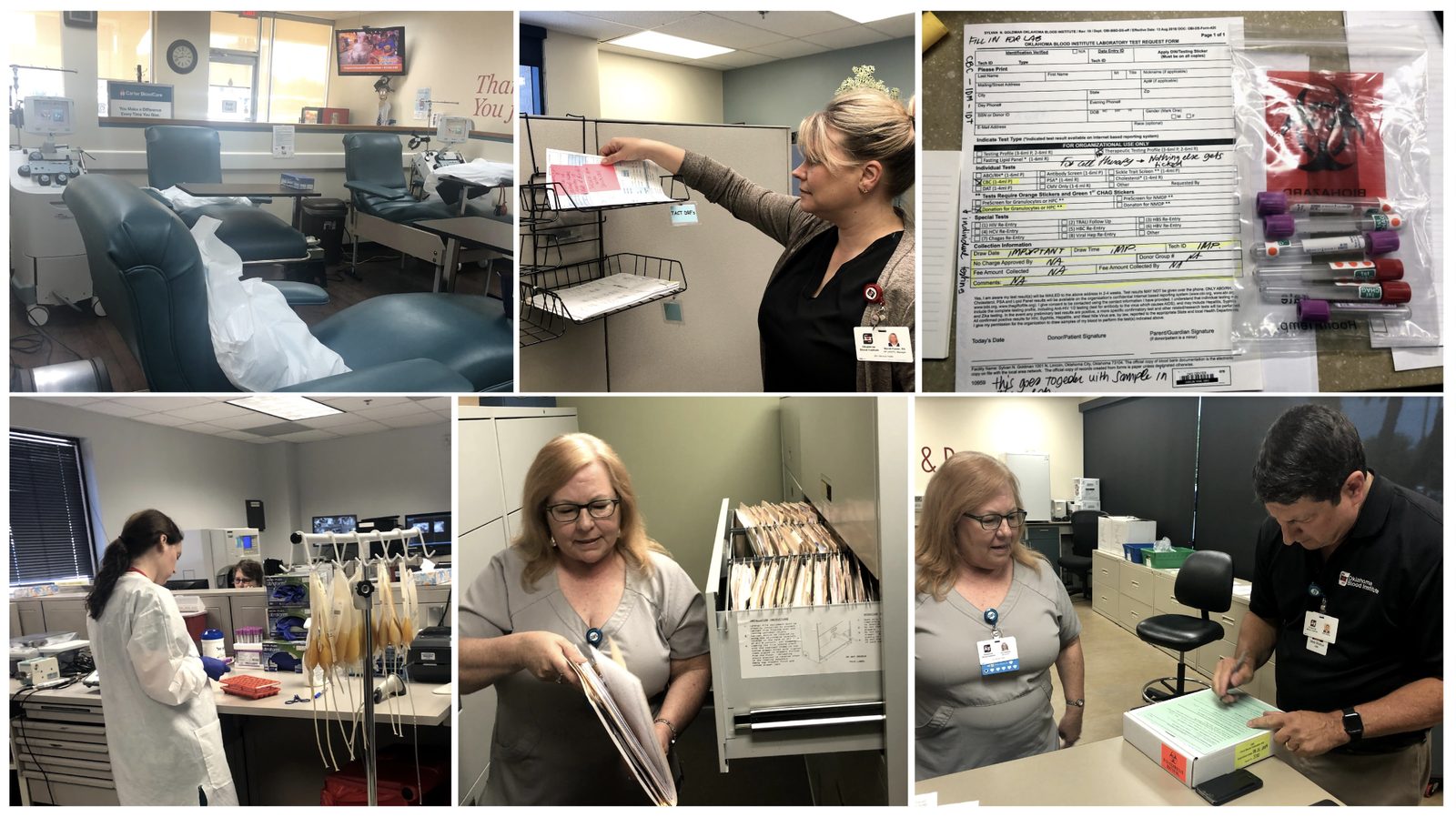
Before any research, we wrote down every assumption the team held and ranked them by how much the project depended on each. That list steered 5 days of shadowing at collection centres with the Blood Centers of America, watching nurses at work and interviewing oncologists and nurses.
03 · Synthesis
The pattern showed up on the wall
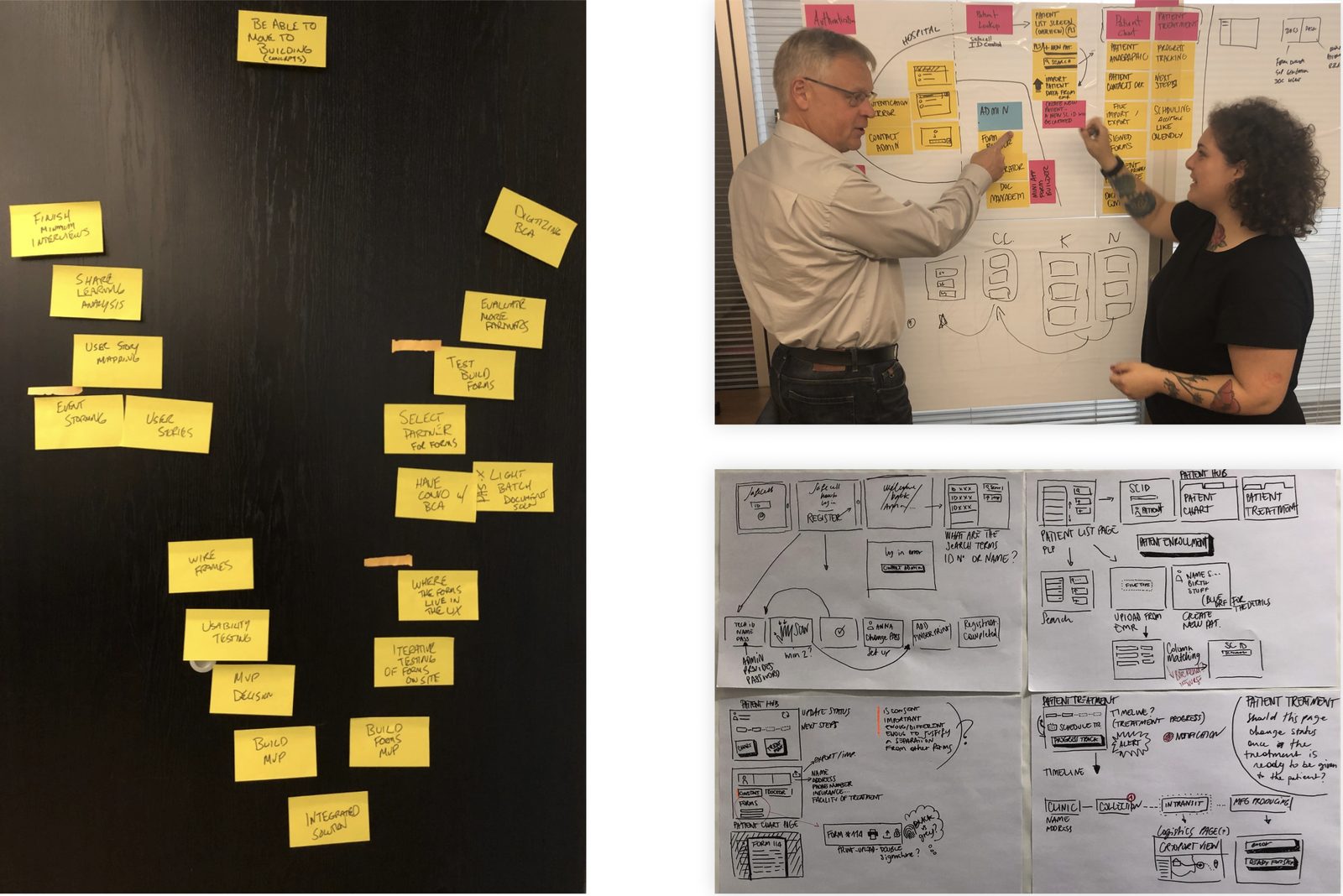
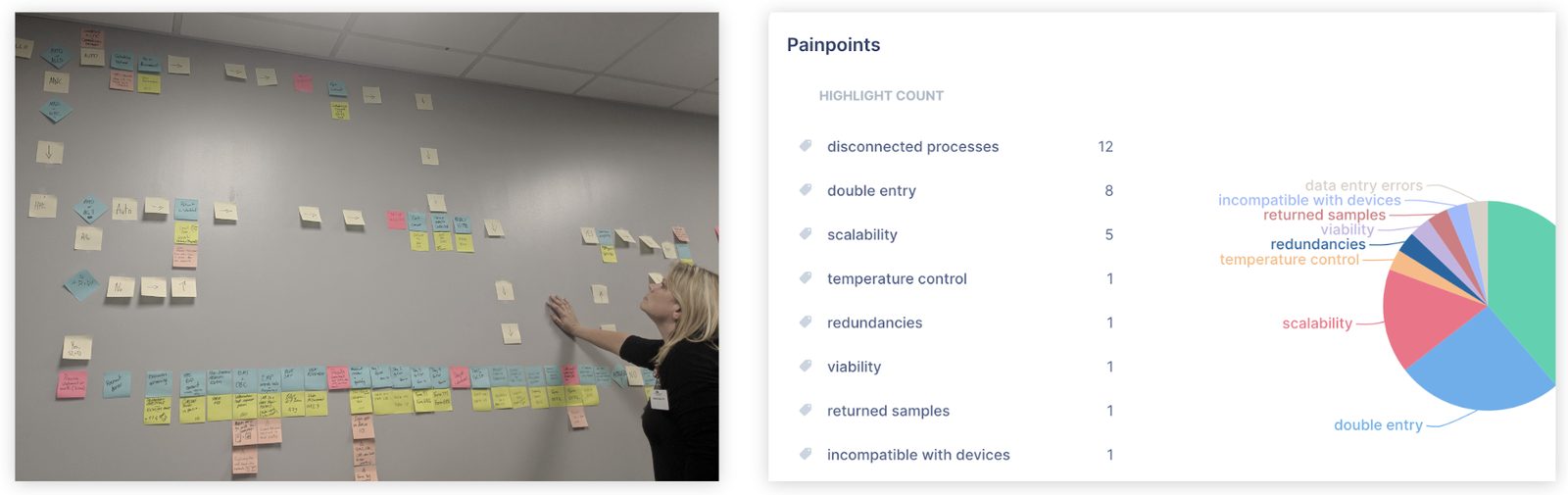
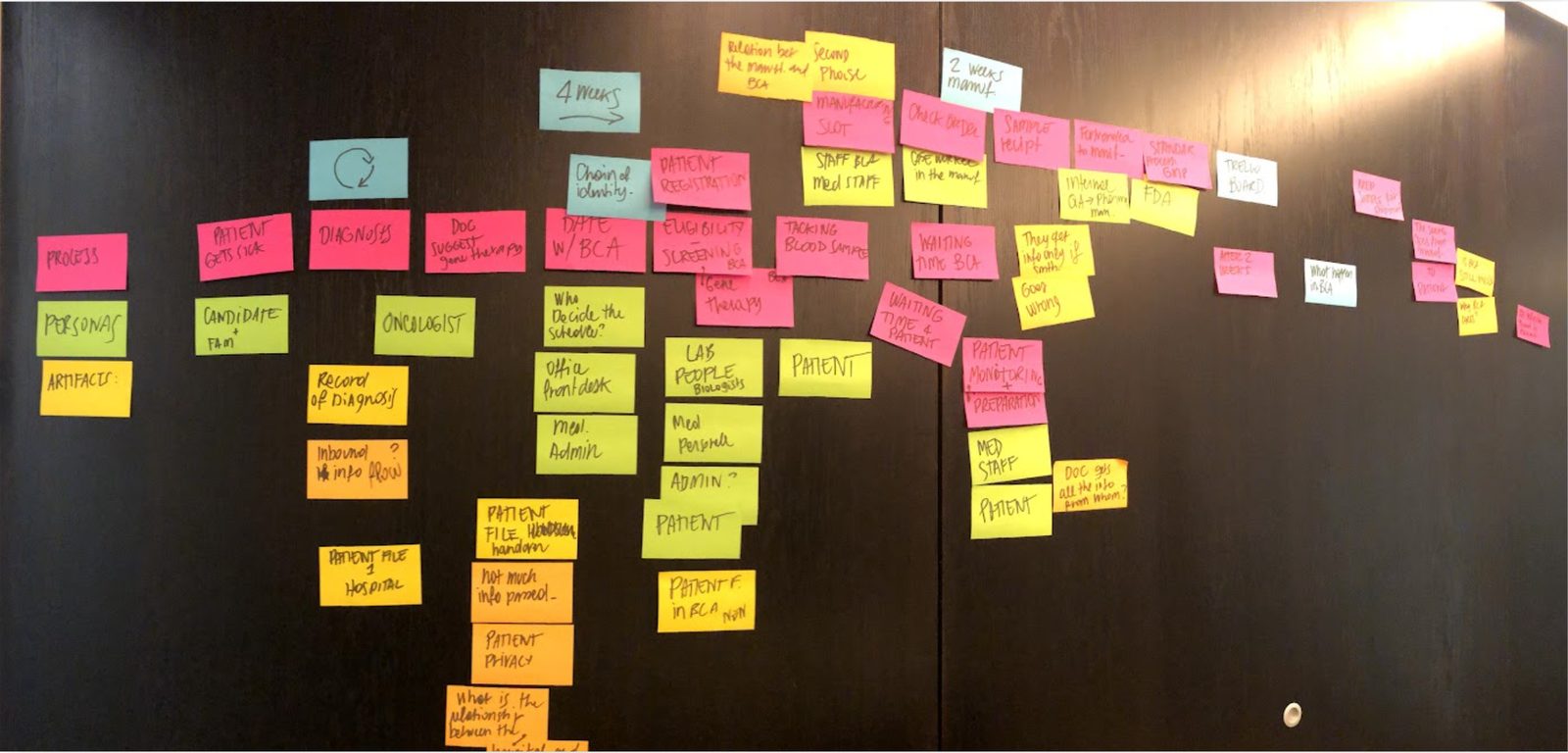
We transcribed the interviews, tagged quotes and clustered them. The simplest tool helped most: a wall of sticky notes, where it became clear that every party struggled with the same 2 things.
04 · Outcome
Orchestration and compliance, at scale
For every player in the chain, orchestration and compliance were the big problems. SafeCell was framed as the least disruptive way to solve both while keeping quality at scale, and taken forward as a prototype in Körber’s innovation funnel.